

Have you ever wondered how and when the Internet started?
The Internet has a vast history. In this blog post, I will walk you through the history of the Internet, highlighting major notable events and technological advancements.
Before delving into the history of the Internet, let’s first understand what the Internet is.
In brief, the Internet is a global network of servers and computers that host web pages. It allows people to access, share information, and communicate with other users.
Accessing your favorite websites, such as Google, X, Bing, Instagram, LinkedIn, Facebook, Gmail, or any other, is essentially accessing the Internet. Additionally, sharing information via email, messengers, mobile applications, and other means also falls under Internet usage.
In short, most things that consume your mobile data or WiFi are part of the Internet.
Before the Invention of the Modern Internet
The beginning of today’s Internet was not simple. For decades, computer scientists have conducted extensive research and invested years of effort in creating the modern World Wide Web.
I would like to walk you through some significant developments in the history of the Internet.
- In October 1969, ARPANET became the first network to use packet switching successfully. UCLA and Stanford universities attempted to transmit the word “Login,” but their system crashed on the letter “g.”
- In 1970, MIT, Harvard University, and BBN deployed ARPANET.
- Raymond Samuel Tomlinson invented email in 1971.
- 1971 marked the start of an era of e-books. The thought was to make information from libraries available to users. The Declaration of Independence was the first e-book.
- In 1972, France started CYCLADES, a network similar to ARPANET. The project was shut down, but it drew attention to the concept of a host computer responsible for transmitting data.
- In 1974, TCP/IP was born with a proposal to link networks similar to ARPANET, known as “inter networks”.
- Gary Thuerk, known as the Father of Spam”, launched the first unsolicited commercial email campaign in 1978.
- January 1, 1983, was the deadline for all ARPANET computers to switch to TCP/IP.
- In 1984, domain names were introduced with DNS. Users can access the pages by typing easy-to-remember URLs instead of numeric IP addresses.
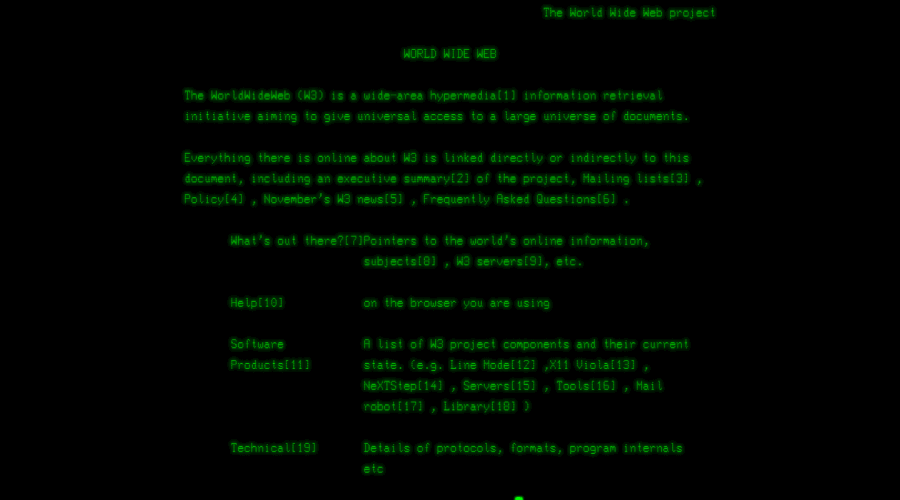
- Tim Berners-Lee proposed the World Wide Web in 1989. It was first called Mesh, but was later renamed the World Wide Web in 1990.
What was the Need, and How did the Internet Start?
The concept of the Internet began as ARPANET.
The United States Department of Defense formed the Advanced Research Projects Agency Network (ARPANET). The idea was to establish a secure communication channel for the military to maintain contact during the war.
The core purpose was to have a network of Pentagon-funded computers to transmit information during the Cold War. Since ARPANET’s architecture had no hub, losing a single or multiple centers during the war did not affect the entire network.
Educational institutions played a significant role and were at the forefront of the research.
Once the war was over, universities leveraged advancements in technology to share information among their users.
During this time, the importance of the connected network was recognized, and the Internet gained widespread fame.
What is the World Wide Web (“www”)?

Many people believe the Internet and the World Wide Web are the same. But there is a slight difference.
The Internet is a global network of computers and servers that enables users to access and share information.
The World Wide Web, in short, is often referred to as “web” or “www,” is a collection of linked information on computers connected to a global network.
Simply, a web browser uses the Internet to access the World Wide Web.
What were the Initial Web Browsers?

In 1990, Tim Berners-Lee developed the first web browser, WorldWideWeb, for the NeXTSTEP operating system. The browser was later renamed to Nexus to avoid confusion with the World Wide Web.
Line Mode Browser was the 2nd in line, the first cross-platform browser compatible with multiple operating systems.
Many other browsers were created in the early 90s, but most were discontinued.
Domain Name, ISP, and Hosting Services
Domain Names
In simple words, a domain name is the address of a website.
At the beginning of the Internet, people used to access web pages on hosts’ numerical IP addresses. For example, an IP address (IPV4) looks like 010.176.982.458.
With the rapid growth of the Internet, it became impossible to memorize and maintain host/website addresses.
In 1983, the Domain Name System was introduced on the ARPANET and published by the Internet Engineering Task Force.
Instead of typing the IP address, you can now call the domain name in a web browser to access a website.
Internet Service Provider (ISP)
An Internet Service Provider (ISP) is an organization that can provide access to the Internet.
The Internet started as a closed network between government agencies, the military, universities, and colleges.
However, over time, these departments began providing their employees with home Internet access.
The state of accessing the Internet at home led to the creation of ISPs.
It acts as a link between your device and the Internet-connected servers.
At the beginning of the Internet era, there were three primary types of ISPs: dial-up services, High-speed Internet (also known as broadband), and DSL (Digital Subscriber Line).
Hosting Services
A hosting service is a web service that facilitates web administrators to publish web pages and related data to the Internet.
Hosting services utilize specialized computers, known as servers, to store the webmaster’s website. The process of storing data on servers and making sites available to global users is known as web hosting.
Initially, hosting a website was a costly process.
The user must have a dedicated computer or server to transfer data and maintain the website’s accessibility to others. The data and web pages were accessible until the devices were turned off. Data access becomes unavailable whenever those hosts are powered down.
Hosting services were introduced with the launch of GeoCities in 1994 to address this issue. However, initially, the hosting services were not accessible to everyone.
But things have evolved. Hosting services are now available for individuals and groups without any restrictions.
Also read: How to Design a Website That Drives Leads and Sales
The Need for Search Engines

With time, the number of websites increased.
The father of the Internet, Tim Berners-Lee, created the first directory in 1992. The concept was to help users navigate and find relevant websites. Later, around the mid-90s, other directories, such as ALIWEB, Yahoo, DMOZ, and The Starting Point Directory, were launched.
There was a surge in the number of websites between 1995 and 2000. As a result, the directories had their golden era during this tenure.
With websites proliferating in directories, it became increasingly complex to find the right ones.
The concept of a search engine emerged to facilitate the search for websites within directories. Users can browse and search for websites.
Yahoo launched its search engine in March 1995.
Later in 1996, Larry Page and Sergey Brin launched their search engine BackRub. The new search engine showed website results based on its backlink analysis.
BackRub later became Google, the largest search engine to date, with nearly 79% desktop search share, as of March 2025, and around a 94% mobile search share.

What is a Search Engine?
A search engine is a program that crawls the entire WWW, saves details in its index, and provides valuable results from the web in response to user queries.
It tends to lead users to relevant information on high-quality websites. A search engine filters the wealth of data available on the web for user searches.
In short, it allows users to find websites with ease.
Search engines employ sophisticated algorithms to evaluate the quality of a website’s pages. For example, Google uses hundreds, possibly thousands of signals to analyze website quality for ranking purposes.
It assigns a value to every page in its index for relevant search phrases. Then, when a user queries, the search engine shows the website listing from its index.
As per Statcounter, below is the sequence of the top 6 search engines as per their popularity:
- Bing
- Yahoo
- Baidu
- Yandex
- DuckDuckGo
How has the Internet Evolved over the Years?

Evolution is inevitable over time, and it’s no different for the Internet. Over the past three decades, the Internet has undergone significant evolution on multiple levels. Everything contributes to the remarkable growth of the Internet, from sending text emails to conference calls and basic text web pages to progressive web applications.
The Internet has become a necessity of the 21st century for everyone.
It’s not limited to computers; it has reached mobile phones, wearables, smart homes, automobiles, AI, ML, and more. Likewise, it’s not limited to sharing information, but has become an integral part of life.
The Internet entertains, communicates, transacts, and keeps you updated with the latest information across the globe.
Artificial Intelligence is making things easier
The impact of AI post-2020 has been enormous in the use of the Internet.
The innovations and automations that make things easier have been tremendous, thanks to products such as Chat GPT, Google Gemini, Claude, Microsoft Copilot, Perplexity, and others.
AI tools also rely on the Internet to crawl data from the web, process it with their advanced algorithms, and present it in well-structured and easy-to-understand information.
What is the importance of the Internet in daily life?
According to Statista (February 2025), there are 5.56 billion Internet users who access the web in one way or another. The Internet has brought knowledge to your fingertips.
Below are some scenarios where the Internet has transformed your daily life:
- Online banking has enabled banking services on your mobile device or computer. You can transfer money, view your statement, or start investing anywhere.
- E-commerce enables the sale and purchase of goods and services directly at your doorstep, offering competitive pricing.
- Online services have changed how people book appointments, study, enjoy sports, plan travel, and more.
- Communication, the core purpose of the Internet’s inception, has become one of the most common means of internet consumption.
- The entertainment industry has flourished. Platforms like YouTube, Netflix, and Amazon Prime offer a vast amount of content for users and content producers to monetize.
- Knowledge: Gen Z loves using the Internet and makes a massive amount of searches across search and social platforms to learn about varied topics.
Do you have an idea as big as the Internet? Or something to monetize from? Grovention helps businesses digitize and monetize them. You can schedule a complimentary consultation on digital growth.

One Response